What to Look for in a Dog Boarding Facility
Not all dog boarding facilities are equal. Learn what to look for in staff, safety, and services so your dog is in the best hands possible.
Leaving your dog behind when you travel can feel stressful, especially if it's your first time doing it. You want your furry best friend to be safe, happy, and well cared for while you're away. That's where finding the right dog boarding facility becomes so important.
But here's the thing: not all boarding facilities are created equal. Some are spacious, clean, and filled with attentive staff who genuinely love animals. Others, well, not so much. As a first-time pet parent navigating this process, it can feel overwhelming trying to figure out what actually matters and what's just clever marketing.
The good news is that knowing what to look for makes the whole process a lot easier. In this post, we're breaking down the key things you should check before trusting any dog boarding facility with your pup. From safety standards and cleanliness to staff qualifications and daily routines, we've got you covered. By the end, you'll feel confident and prepared to find a place where your dog will truly thrive while you're away.
Trained Staff and Supervision Ratios
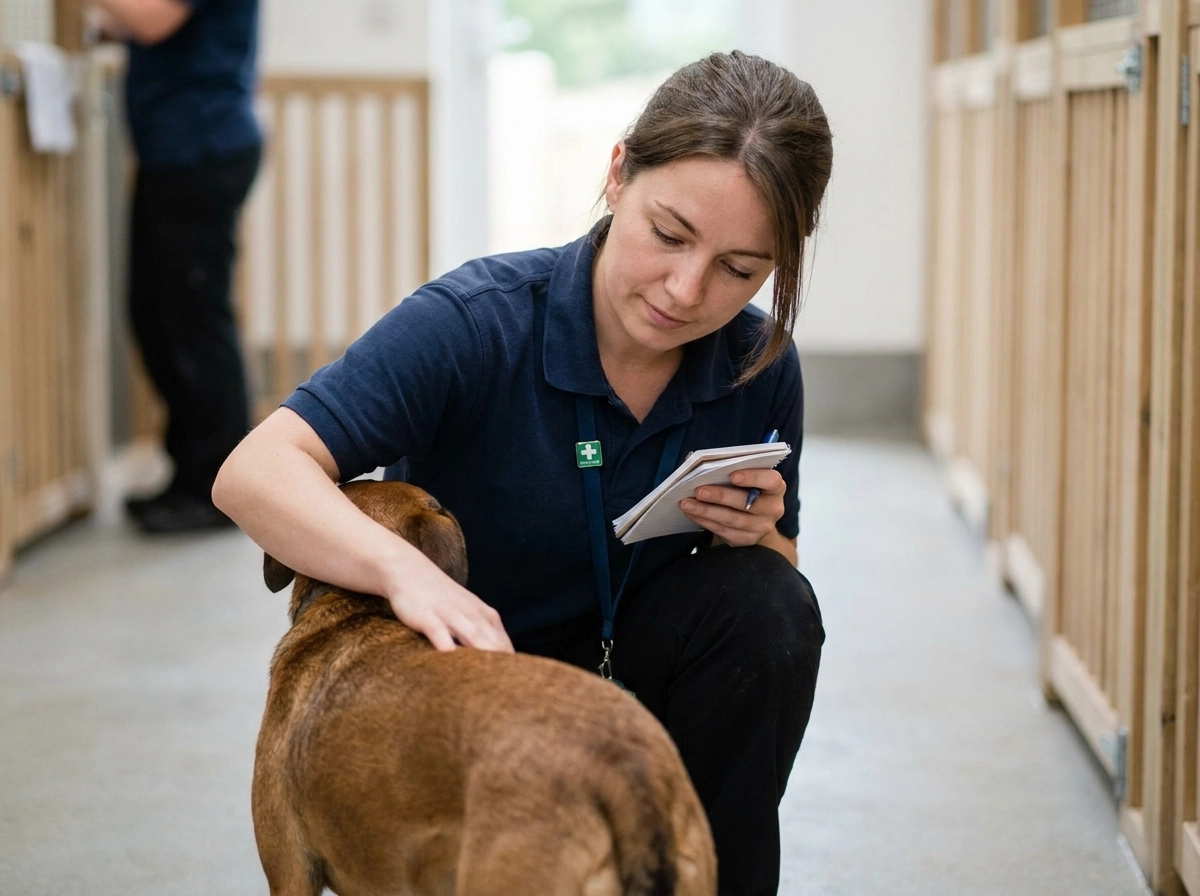
When evaluating a dog boarding facility, one of the first things you should ask about is staff training. Look for certifications like Pet First Aid or CPR, which tell you the team is equipped to respond quickly in an emergency. Experience with different breeds and temperaments matters too, since a nervous rescue dog and a high-energy working breed have very different needs. Dog daycare and boarding safety is something reputable facilities take seriously every single day, not just during an initial inspection.
Staff-to-dog ratios are another big deal. The more dogs each team member is responsible for, the less individual attention your pet receives during play sessions, meal times, and rest periods. Smaller group sizes allow caregivers to catch and de-escalate issues before they become real problems. Always ask a facility for their specific ratio, since there is no single universal standard and requirements vary by state.
Transparency is a strong signal of quality. A trustworthy facility will tell you exactly how many staff members are on duty and what qualifications they hold. You can also check dog daycare regulations by state to understand what your local standards require.
One question many pet owners forget to ask: are staff physically present overnight? Some facilities leave boarding guests without supervision after business hours, which is worth knowing before you book. At Cincinnati Dog Depot in Glendale, Ohio, the focus on attentive, hands-on care for both dogs and cats is a big reason why families throughout the Cincinnati area feel confident leaving their pets for overnight stays.
Health and Vaccination Requirements

Any trustworthy dog boarding facility will ask for proof of vaccinations before your dog ever steps through the door. The three core vaccines you should expect to provide documentation for are rabies, distemper (sometimes listed as DHPP or DA2PP), and Bordetella, which protects against kennel cough. These are considered the backbone of disease prevention in group care settings, and according to what veterinary experts recommend for dogs going into boarding, having these current before your reservation is a baseline, non-negotiable requirement at reputable facilities. A quick tip: schedule a vet visit at least two weeks before drop-off, since some vaccines need time to become fully effective.
It is also worth understanding why these requirements exist. When dogs from different households mix in shared spaces, respiratory illnesses like kennel cough can spread quickly. Vaccination policies protect every animal in the building, not just your own. A facility that enforces these standards is one that takes communal health seriously across the board.
Beyond vaccines, ask specifically about illness isolation procedures. If your dog shows signs of sickness mid-stay, you want to know who gets notified first and how quickly. Good facilities have a clear protocol, including separating the affected dog and contacting the owner promptly.
Parasite prevention is another area worth raising. Shared outdoor play yards increase exposure to fleas, ticks, and other parasites, so ask whether the facility has any prevention requirements or policies in place.
Finally, if a facility stumbles when you ask these questions or gives vague answers, treat that as a serious red flag. Clear, confident answers about health protocols are a sign you are leaving your dog in capable, responsible hands, no matter how attractive the pricing or amenities might look.
A Clean, Safe Physical Environment
Before you book a stay, ask for a tour. Walking through a dog boarding facility in person tells you more than any website ever could. Pay close attention to your nose first: a clean facility should smell fresh or neutral, not like heavy chemical sprays masking something worse. Ammonia odors are a red flag that waste is not being cleaned up promptly. Look at the sleeping areas, play zones, and hallways. Are surfaces visibly clean? Is equipment organized? First impressions here are usually accurate reflections of daily operations.
Physical safety features are non-negotiable. According to safety standards every dog daycare should follow, sturdy fencing, secure gates, and non-slip flooring are baseline requirements for any reputable facility. Double-door entry systems help prevent accidental escapes, and play areas should always be separated by size and temperament. Small dogs should never share a run with large breeds, full stop.
Sleeping arrangements are worth asking about specifically. Some facilities use individual kennels, others offer shared suites or open dormitory-style rooms. None of these options is automatically better, but you deserve to know what your dog is walking into. More importantly, ask whether the spaces are climate controlled year-round. The physical tools and equipment used in kennel management directly affect animal welfare, and the AVMA identifies structural integrity and climate control as primary drivers of a healthy boarding environment.
A well-maintained space is ultimately a signal that a facility holds itself to high professional standards in every area, not just the visible ones.
Boarding vs. Daycare: Know the Difference
Before you start comparing facilities, it helps to understand what you are actually shopping for. Dog boarding and doggy daycare are two different services, and mixing them up can lead to a lot of confusion when you are trying to find the right fit for your pup.
Dog boarding refers to overnight stays where your pet sleeps at the facility, eats there, and is cared for around the clock. Doggy daycare, on the other hand, is daytime supervision where your dog socializes, plays, and burns energy during the day before coming home to you each evening. Think of it like school for your dog versus a sleepover.
Many pet owners actually use both services depending on their schedule. Daycare might be a regular Tuesday and Thursday thing, while boarding covers the weeks when you travel. Some facilities, including our team here in Glendale, offer both under one roof, which makes life a lot easier since your dog already knows the space and the staff.
This distinction matters more than you might think when evaluating a facility. A place that runs an excellent daycare program, with high energy group play and lots of supervised interaction, may operate its overnight boarding under completely different conditions, with different staffing ratios and quieter sleep environments. The pet boarding services market is valued at USD 12 billion in 2025 and growing fast, which means more options exist than ever before, making careful evaluation even more important.
One practical tip: ask whether the facility offers a trial daycare visit before your dog's first overnight stay. This gives an anxious or shy dog a chance to get comfortable with the smells, sounds, and other animals in a lower-stakes setting before spending the night.
Outdoor Play and Socialization Opportunities
Dogs are naturally social creatures, and a boarding stay built around structured play, outdoor exercise, and peer interaction is far more enriching than one spent mostly in a kennel run. Think of it this way: would you rather spend a vacation sitting alone in a small room, or actually getting outside and connecting with others? Your dog feels the same way.
It is worth noting that 97% of U.S. pet owners now consider their animals family members. That shift in mindset is a big reason why activity-rich boarding experiences are quickly replacing bare-bones kennel stays as the new standard. Pet owners want more for their dogs, and quality facilities are stepping up to deliver it.
When you are evaluating a dog boarding facility, ask these specific questions about outdoor time and play:
How many play sessions are offered each day, and how long does each one last? A single brief outing is not enough. Look for multiple sessions spread throughout the day.
Is the outdoor space shaded, weather-appropriate, and properly sized? Dogs should not be crammed into a small yard with too many others and no relief from the sun or rain.
What is the staff-to-dog ratio during outdoor play? More dogs outside at once means more supervision is needed to keep everyone safe.
Socialization screening is another important piece of the puzzle. Responsible facilities evaluate each dog's temperament and assess playgroup compatibility before mixing animals together. This step reduces the risk of conflict, stress, or injury during group sessions.
Not every dog loves high-energy group play, and that is completely okay. Senior dogs, anxious pups, or those who simply prefer quieter environments should have access to small-group or solo play options. Always ask whether low-stimulation alternatives are available before you book.
Cat Boarding: Do Not Overlook It
If you have a cat at home, this one is for you. About 32.1% of U.S. households own a cat as of 2024, yet cat-specific boarding options remain far less common than dog boarding facilities. Many cat owners simply assume they have no good options and end up relying on a neighbor or leaving their cat alone with an automatic feeder. That is not ideal, and the good news is that better solutions exist.
Cats have genuinely different needs when it comes to boarding, and those differences matter. Dogs thrive on noise, activity, and social interaction. Cats are the opposite. They need quieter spaces, separation from dogs, and an environment that lets them express natural behaviors like hiding, climbing, and perching at different heights. A cat dropped into a loud, dog-heavy facility is going to be stressed, and stressed cats often stop eating and withdraw silently in ways that are easy to miss.
For households with both dogs and cats, finding one facility that handles both species is a huge win. Coordinating separate drop-offs, pickups, and care instructions across two different providers is a real logistical headache, especially during busy travel periods. A single facility that boards both animals simplifies everything. Cincinnati Dog Depot in Glendale, Ohio boards both dogs and cats, making it a straightforward one-stop option for mixed-pet households in the Cincinnati area.
When you are evaluating any facility for cat boarding, ask these questions directly. Are cats housed completely separately from dogs, with no shared noise or air corridors? How often does staff check on cats, given that feline distress is often quiet and easy to overlook? Does the space include vertical options like shelves or perches and areas where cats can hide and feel safe? The answers will tell you quickly whether the facility genuinely understands feline needs or is simply offering an afterthought to its main dog business.
Grooming Add-Ons During a Boarding Stay
Here is one perk that often flies under the radar: you can schedule a professional grooming appointment for your dog during the boarding stay itself. Instead of dropping your dog off at one location, picking them up, and then driving across town to a groomer, you simply collect a clean, freshly groomed pet at the end of the stay. For busy pet owners, that kind of convenience is hard to overstate.
Full-service facilities that bundle grooming with boarding and daycare are gaining real traction for exactly this reason. When a single facility can handle multiple care needs in one visit, it removes the scheduling gymnastics that come with juggling separate providers. It is a smarter use of your time, and it tends to be less stressful for your dog too, since they are already settled into a familiar environment when the grooming appointment happens.
When you are shopping for a facility, ask specifically what grooming services are on the menu. Most professional setups offer options like full baths, breed-specific haircuts, nail trims, and ear cleaning. Some also provide teeth brushing and de-shedding treatments. Ask whether these can be attached to an existing boarding reservation and whether you need to request them at drop-off or book in advance.
At Cincinnati Dog Depot in Glendale, Ohio, professional pet grooming is offered right alongside boarding and daycare services, so local pet owners can truly handle everything in one place.
There is also a quiet health benefit worth mentioning. Groomers work hands-on with your dog's entire body, which puts them in a good position to notice anything unusual, such as a new skin irritation, a lump, or coat changes that might signal an underlying issue. That kind of informal observation adds a layer of value that goes well beyond a clean coat.
Transparent Pricing and What Is Actually Included
Money matters, and in 2025 and 2026, pet owners are paying closer attention to every dollar they spend. With the average pet parent spending around $2,360 per year on their animals, it makes complete sense to want a clear picture of what a boarding stay actually costs before you hand over your credit card.
Before booking, ask any facility to walk you through exactly what the base rate covers. A solid base rate should typically include a sleeping space, standard meals (if your dog eats during the stay), fresh water, and access to daily play or exercise sessions. Anything beyond that, such as a private or premium suite, extra walks, medication administration, or special dietary preparation, should be listed separately with its own price attached. That kind of breakdown is not just helpful for budgeting; it is a sign that the facility runs a tight, professional operation.
Here is something worth remembering: a facility that openly shares its pricing structure and explains the reasoning behind it is showing you something important. Operational confidence and pricing transparency tend to go hand in hand with genuinely high-quality care. Facilities that are vague about costs, or that bury fees in the fine print, are often giving you a preview of how they handle communication in general.
Be thoughtful about unusually low prices too. Legitimate operating costs, including staffing, sanitation supplies, insurance, and utilities, are unavoidable for any well-run facility. A price that seems too good to be true may reflect reduced supervision ratios or shortcuts in health and cleaning protocols. Quality care costs what it costs, and providers who are transparent about that are worth your trust.
Online Booking and Communication Access
In 2026, the ability to book a stay online, check real-time availability, and receive updates about your pet without picking up the phone is no longer a bonus feature. It is a baseline expectation. According to industry research, online booking and digital discovery are key accelerators of growth in the pet boarding market, reflecting a broader shift in how pet owners find and evaluate local care providers. If a facility requires you to call during business hours just to check whether a kennel is open for a specific weekend, many pet owners will simply move on to the next option.
Communication during the actual stay matters just as much as the booking experience. Before you commit, ask directly whether the facility sends check-in photos, daily messages, or any kind of update during your pet's visit. Knowing your dog is happily napping or playing fetch with staff does more to reduce anxiety than any reassurance on a website. As research on technology and client loyalty in pet care confirms, facilities that build structured communication into their process turn one-time customers into long-term regulars.
Pay attention to how quickly a facility responds to your initial inquiry, too. A slow or inconsistent reply before you have even booked is a signal worth noticing. Responsiveness reflects operational culture and tells you a lot about how staff will handle questions or unexpected situations once your pet is actually in their care.
Finally, ask whether the facility offers webcam access to play areas or kennels. It is not yet universal, but it is an increasingly available feature at premium boarding facilities and worth asking about if real-time visibility gives you peace of mind while you are away.
Local Reputation and Community Trust
National boarding chains are expanding across Ohio and the Midwest at a steady pace, but local independent facilities bring something to the table that a corporate brand simply cannot replicate. When the owners and staff live in the same community as their clients, there is a built-in level of accountability. Their business lives and dies by word-of-mouth from neighbors, school parents, and local dog park regulars. That kind of stakes-based care tends to produce a very different experience than a rotating staff at a franchise location where management changes regularly and no one recognizes your dog by name.
When you are researching options, Google and Facebook reviews are a reasonable starting point, but do not stop there. Ask your veterinarian, your neighbors, or your local neighborhood group who they actually use and trust. For a high-stakes decision like leaving your pet overnight, a personal referral from someone whose dog you have met carries far more weight than a star rating from a stranger. Ohio pet owners have increasingly turned to community-curated recommendations over purely algorithmic rankings, and for good reason: local knowledge cuts through the noise in ways that online scores alone cannot.
One underrated evaluation tip is to pay close attention to how a facility responds to negative reviews, not just how many five-star ratings it has collected. A thoughtful, respectful response to a complaint tells you a great deal about how management handles problems and whether they take feedback seriously.
Cincinnati Dog Depot is locally owned and based in Glendale, Ohio, serving Cincinnati-area pet owners who want genuine, attentive care from people who are genuinely invested in this community. That local commitment is not a marketing line; it is simply how a neighborhood business operates.
When to Book: Seasonal Timing Tips for Cincinnati Pet Owners
Timing matters more than most first-time boarders realize, and getting this right can be the difference between securing your preferred facility and scrambling for a last-minute alternative.
Peak seasons fill up fast. Demand at quality dog boarding facilities spikes significantly during the summer travel window from Memorial Day through Labor Day, and again around Thanksgiving, Christmas, and spring break. These are the stretches when Cincinnati-area families travel the most, and boarding facilities feel that pressure weeks in advance. If you have a holiday trip on the calendar, do not wait until the week before to start calling around.
January and February offer a breather. These months are historically the slowest for boarding demand, which typically means more availability and sometimes more scheduling flexibility. That said, easier availability is not the same as better quality. A facility that is worth your trust in July is worth your trust in January, and the reverse is also true. Use slower months to tour facilities and ask questions without the pressure of peak-season urgency.
Book three to four weeks ahead for summer, and even earlier for holiday weekends. For extended holiday weekends like Memorial Day or Thanksgiving, six to eight weeks of lead time is a smart target for Cincinnati pet owners.
If this is your first time boarding your dog, schedule a daycare visit or a short trial stay first. A lower-stakes visit lets your dog get comfortable with the space, the smells, and the staff before a longer separation. It also gives you a chance to observe how the team handles your pet in person.
Always ask about cancellation policies before you commit. Travel plans change, and a clearly written, fair cancellation policy is a reliable signal that a facility is professionally run and respects its clients.
Ready to Find the Right Fit for Your Dog?
You have covered a lot of ground in this checklist, and here is the bottom line: finding the right dog boarding facility comes down to ten straightforward things. Trained and credentialed staff, solid health and vaccination protocols, a clean physical environment, a clear understanding of boarding versus daycare, meaningful play and socialization time, cat boarding options if you need them, grooming add-ons, transparent pricing, easy digital access, and a strong local reputation. Each one of those factors tells you something important about how a facility actually treats the animals in its care.
Here is a stat worth sitting with: 97% of pet owners consider their animals family members. That number should set the standard for every facility you consider. Your dog deserves an environment that reflects that level of care, not just a place to wait until you get home.
If you are in the Cincinnati area, we would love for you to come see us in person. Cincinnati Dog Depot in Glendale, Ohio is open for tours, and walking through the facility yourself is always the best first step. Even if a trip is not on your calendar yet, our grooming and daycare services are available year-round, giving you a great reason to stop by anytime.
Ready to take the next step? Reach out or book a visit with us to see firsthand what a quality boarding experience looks like. We are here whenever you and your pup are ready.
Conclusion
Finding the right dog boarding facility does not have to feel overwhelming. By focusing on the essentials, cleanliness and safety standards, qualified and caring staff, structured daily routines, and transparent communication, you can confidently narrow down your options and find a place that truly fits your dog's needs.
Your dog deserves more than just a place to stay. They deserve an environment where they feel comfortable, stimulated, and genuinely cared for while you are away.
Now it is time to put this knowledge to work. Start by making a list of local facilities, schedule tours, and ask the hard questions. Trust your instincts when you visit. If something feels off, keep looking. The right facility is out there, and with the right checklist in hand, you are more than ready to find it.